

Last Updated: 25 October 2026
Quick Summary
To stop wetsuit flushing, ensure your suit fits snugly at the neck, wrists, and ankles so water doesn't constantly flow in and out. A proper seal traps a thin layer of water against your skin that your body heat warms, keeping you comfortable in the ocean.
- Your neck opening should allow only one finger between the suit and skin, as two fingers lets water flush constantly
- Wrist and ankle cuffs must sit at the bone with gentle pressure, not loose or bunched
- Glideskin technology at the neck creates a smooth seal that prevents water entry when positioned correctly
- Maintenance matters: rinse after every session, store flat or hanging, and check seals for cracks before paddling out
- Choosing a suit cut for your body shape seals better at the neck, shoulders, and waist than standard sizing
Table of Contents
- What Causes Wetsuit Flushing and Why It Matters
- Getting Your Wetsuit Fit Guide Right
- Sealing the Wetsuit Neck to Prevent Water Entry
- Fixing Back Zip Wetsuit Flushing Issues
- Cuff and Ankle Sealing Techniques
- Wetsuit Care and Neoprene Maintenance to Preserve Seals
- Choosing the Right Suit for Your Body and Water Conditions
- Frequently Asked Questions
What Causes Wetsuit Flushing and Why It Matters
To stop wetsuit flushing, you need to understand that it happens when water constantly flows in and out of your suit instead of staying trapped as an insulating layer. This occurs when gaps form around the neck, wrists, ankles, or back zip, places where water can enter freely. The result is that your wetsuit loses its ability to keep you warm, defeating its entire purpose.
Understanding how to stop wetsuit flushing matters because it's the difference between a comfortable session and one where you're shivering within minutes. A properly sealed wetsuit traps a thin layer of water against your skin, which your body heat warms. When flushing happens, that protective layer keeps refreshing with cold water from the ocean.
Flushing is preventable. Most cases come down to fit, technique, and basic maintenance. Once you know what to look for, you can solve the problem yourself.
Getting Your Wetsuit Fit Guide Right
The foundation of stopping flushing is getting the right fit from the start. A suit that's too loose will flush no matter what you do. A suit that's too tight restricts movement and creates its own problems. The sweet spot is snug without being uncomfortable.
Neck and shoulder fit
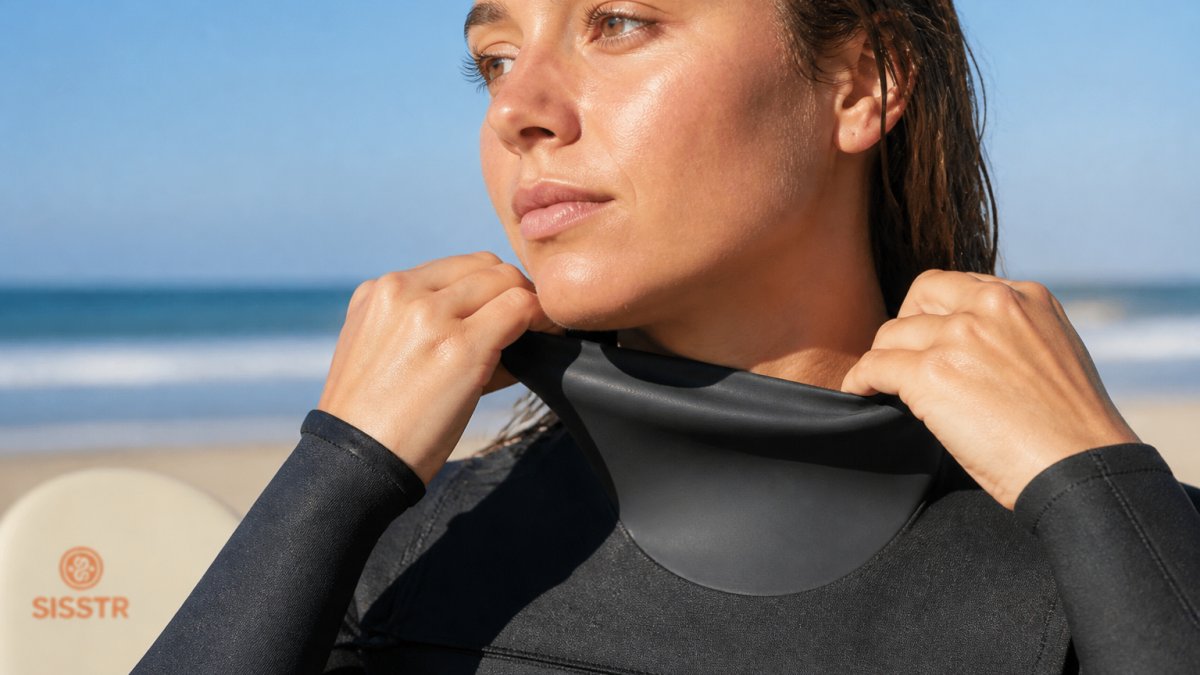
Your neck opening should be tight enough that you can only fit one finger between the suit and your skin. If you can fit two fingers, water will flush through constantly. The neck should sit high on your shoulders without gaping.
Check the shoulder seams. They should sit right at the edge of your shoulder bone, not sliding down your arm or pulling up toward your neck. Misaligned shoulders force the suit to gap in places it shouldn't.
Arm and leg openings
Wrist and ankle openings need to be snug but not cutting off circulation. You should feel gentle pressure, not pain. The cuff should sit right at your wrist bone, not halfway up your forearm or bunched at your hand.
The same principle applies to ankles. A loose ankle opening is one of the most common causes of flushing because water rushes in every time you kick. The opening should grip your ankle firmly.
For proper sizing guidance and to find a suit that fits your body shape correctly, check our detailed sizing guidance to ensure proper fit that prevents flushing.
The key to preventing flushing is ensuring your wetsuit fits snugly in all the critical areas.
| Area | Correct Fit | Why It Matters |
|---|---|---|
| Neck opening | One finger gap between suit and skin | Two fingers allows water to flush constantly |
| Shoulder seams | Sit at edge of shoulder bone | Misalignment causes gapping |
| Wrist cuffs | Snug at wrist bone, gentle pressure | Loose cuffs let water rush in with paddle strokes |
| Ankle openings | Firm grip around ankle bone | Loose ankles are a major flushing source with every kick |
Sealing the Wetsuit Neck to Prevent Water Entry
The neck is where most flushing starts. This is the easiest place for water to enter because it's the largest opening and it moves constantly as you paddle and turn your head.
A proper neck seal works by creating a barrier between your skin and the ocean. The best wetsuits use glideskin technology at the neck, a smooth, grippy material that seals directly to your skin. When you pull the suit on, the glideskin should sit flush against your neck without wrinkles or gaps.
If your suit has a glideskin neck, make sure you're positioning it correctly:
- Pull the suit up so the neck collar sits high on your neck
- Smooth out any wrinkles or bunching around the collar
- The seal should feel snug but not choking
- Avoid rolling the collar down, this breaks the seal immediately
The Sisstr 7 Seas 3/2 Chest Full Wetsuit features glideskin on the neck specifically designed to seal to your skin and prevent flushing. At £279.95, it's built with this problem in mind.

Fixing Back Zip Wetsuit Flushing Issues
Here's what to check:
- Make sure the zip is fully closed and the pull handle sits flat
- The suit should fit snugly across your shoulders and back
- Any bunching or loose fabric on your back will create flushing
- Some back zip suits have a flap or tape over the zip seam, make sure it's smooth and flat
If flushing persists with a back zip suit, the fit might be the issue.
Sisstr New Seas 3/2 U-Zip Full Suit Wetsuits →
Cuff and Ankle Sealing Techniques
Your wrists and ankles are smaller openings than the neck, but they're just as important for preventing flushing. Every paddle stroke moves water around these areas.
For wrist cuffs:
- Roll the cuff down so it sits right at your wrist bone
- Smooth out any wrinkles in the neoprene
- The cuff should feel like a gentle squeeze, not tight enough to cut off circulation
- Some suits use liquid tape on the cuffs, this creates a waterproof seal that works best when the cuff itself fits well
For ankle cuffs:
- Position the cuff so it sits snugly around your ankle bone
- Smooth out bunching before you paddle out
- Ankle gaps are a major source of flushing because water rushes in with every kick
- Make sure you're not pulling the suit up too high at the waist, which can loosen the ankle cuffs
If you find your cuffs constantly loosening in the water, it might be a fit issue. The suit might be too big overall, allowing it to shift and loosen the cuffs.
Wetsuit Care and Neoprene Maintenance to Preserve Seals
Once you have a suit that fits and seals properly, maintenance keeps those seals working. Learn how proper wetsuit maintenance and care extends the life of seals that prevent flushing. Neoprene breaks down over time, especially the sealing materials like glideskin.
After every session:
- Rinse the suit thoroughly inside and out with fresh water
- Pay special attention to the neck, wrists, and ankles where seals are critical
- Don't use hot water, it damages neoprene
- Hang the suit in a cool, shaded spot to dry completely
Between sessions:
- Never fold the suit tightly or crease the sealing areas
- Store it flat or hanging, never bunched in a bag
- Keep it away from direct sunlight, which degrades neoprene
- Avoid hanging it in direct heat
Checking your seals:
- Before paddling out, run your finger around the neck seal and feel for cracks or stiff spots
- If the glideskin feels hard or brittle, it's deteriorating and flushing will get worse
- The same applies to liquid tape on cuffs, if it's peeling or cracked, it's time to repair or replace
Choosing the Right Suit for Your Body and Water Conditions
The best way to stop flushing before it starts is choosing a suit designed for your body and the water you're in.
For your body:
- Extended sizes aren't one-size-fits-all, they're cut differently to fit fuller chests, hips, and thighs
- A suit cut for your shape will seal better at the neck, shoulders, and waist
- Standard sizing doesn't work for everyone, and forcing it creates flushing
- Look for suits with tailored fits that match your proportions
For water temperature:
- Thicker suits (4/3mm or 5/4mm) are designed for colder water.
- Thinner suits (3/2mm) work for warmer conditions.
- Seasonal changes mean you might need different suits, don't expect one suit to work year-round
The Sisstr 7 Seas 4/3 Chest Zip Wetsuit at £299.95 is built for cold water with reinforced sealing at the neck and cuffs. It's designed with chest zip entry and triple-glued, blind-stitched seams to prevent flushing in demanding conditions.

For beginner-friendly wetsuits that are less prone to flushing issues, explore options built with sealing technology from the start.
Wetsuit flushing ruins sessions and wastes money on a suit that should keep you warm. The fix starts with proper fit, moves through technique, and continues with maintenance. At Sisstrevolution, we build our wetsuits with sealing technology like glideskin on the neck and liquid tape on cuffs. Get a suit that fits your body, seal it properly before paddling out, and maintain it between sessions, and flushing becomes a problem you've solved.
Frequently Asked Questions
What causes a wetsuit to flush?
Wetsuit flushing happens when water continuously cycles in and out through gaps in the suit, typically at the neck, cuffs, or back zip. Poor fit around the shoulders and neck is the most common cause, followed by worn seals, improper entry technique, or a suit that's too loose. Even small gaps allow cold water to flush through with each paddle stroke or wave impact, reducing warmth and comfort in the water.
How should a wetsuit fit around the neck for a proper wetsuit fit guide?
Your wetsuit neck should fit snugly but not restrict breathing or movement. There should be roughly one finger's width of space between the neoprene and your skin when you're standing upright. When you bend forward or paddle, the collar should stay in contact with your neck without pulling away. Check that the shoulder seams align with your actual shoulders, if they're too far forward or back, water will flush through the gaps. A properly fitted neck is the foundation of stopping wetsuit flushing.
How do I maintain my wetsuit neck seal and other seals to prevent flushing?
Rinse your wetsuit thoroughly with fresh water after every session, inside and out, paying special attention to seams and sealed areas. Hang it to dry in shade away from direct sunlight, which degrades neoprene and breaks down seal integrity. Avoid standing on the wetsuit when changing, as this stresses the glued seams. Store it flat or loosely rolled, never folded or creased. Over time, liquid tape and glideskin seals wear down; if flushing persists despite proper fit, the seals may need professional repair or replacement.
Can I fix back zip wetsuit flushing without damaging the suit?
Back zip wetsuits can be prone to flushing at the spine seam if the seal degrades or if the suit is too loose across the back. First, check fit by wearing it and paddling; if water clearly enters from the back, the suit may be too large. If fit is correct but flushing persists, the seam tape may need resealing.
