

Table of Contents
- Quick Comparison Table
- Sisstr 7 Seas 3/2 Chest Full Wetsuit: The All-Round Beginner Choice
- Sisstr Summer Seas 2/2 Spring Suit: Warm Water Starter
- Women's Wetsuit Size Guide: Getting the Fit Right
- Surf Wetsuit Thickness Guide: Choosing the Right Millimetre
- Full Wetsuit vs Shorty: Which Suits You Better
- How to Care for a Wetsuit: Extend Its Lifespan
- Frequently Asked Questions
Last Updated: October 12, 2026
Quick Comparison Table
| Wetsuit | Thickness | Best For | Price | Water Temperature |
|---|---|---|---|---|
| Sisstr 7 Seas 3/2 Chest Full | 3mm | Cool water, year-round | £279.95 | 13-18°C |
| Sisstr Summer Seas 2/2 Spring Suit | 2mm | Warm water, travel | £129.95 | 16-22°C |
| Sisstr New Seas 3/2 U-Zip Full Suit | 3mm | All-rounder, easy entry | £399.95 | 13-18°C |
| Sisstr 7 Seas 4/3 Chest Zip | 4mm | Cold water, winter | £299.95 | 11-14°C |
| Sisstr 7 Seas 5/4 Chest Zip | 5mm | Very cold water | £329.95 | 8-12°C |
Picking your first surf wetsuit as a beginner feels overwhelming. You're staring at thickness ratings, entry systems, and price tags with no idea what actually matters. At Sisstrevolution, we offer wetsuits that stay put, keep you warm, and don't cost the earth. The difference between a suit that works and one that doesn't often comes down to three things: thickness, fit, and entry style. Get those right, and you'll spend more time in the water than wrestling with your gear.

Sisstr 7 Seas 3/2 Chest Full Wetsuit: The All-Round Beginner Choice
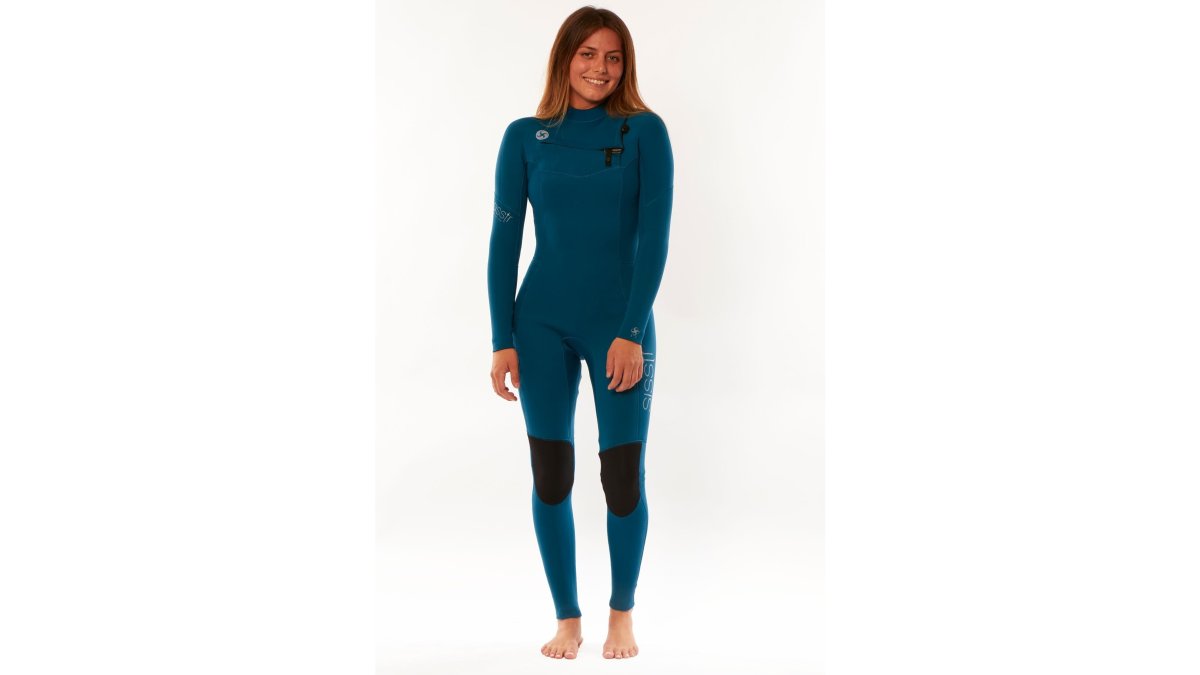
The Sisstr 7 Seas 3/2 is the natural starting point for most new surfers. It's built for cool water between 13-18°C, which covers most of the year in most regions. The 3mm thickness gives you genuine warmth without the bulk that heavier suits impose. More importantly, it's designed specifically for women's bodies, the chest-zip entry means you're not fighting with a back zip that sits awkwardly, and the tailored fit actually follows your shape rather than hanging loose.

What makes this suit stand out for beginners is the construction. The limestone-based neoprene is softer and stretchier than cheaper alternatives, so paddling out doesn't feel like you're wearing a restrictive jacket. The thermal lining dries fast, which matters when you're changing between sessions or heading straight to work. The glideskin neck seal prevents flushing, water trickling down your back mid-session, and the knee pad won't shred after a few months of kneeling on your board.
At £279.95, it's positioned between budget options and premium suits. You're paying for durability and fit rather than brand hype. The one-year warranty on seams and neoprene gives you peace of mind if something goes wrong early on.
Sisstr Summer Seas 2/2 Spring Suit: Warm Water Starter
If you're a beginner in warmer water, or you travel to tropical breaks, the Sisstr Summer Seas 2/2 is your entry point. At 2mm thickness, it's designed for water between 16-22°C. The long sleeves give you sun protection and a bit of thermal help, while the boy-short bottom offers full coverage without excess material bunching up when you paddle.
The back-zip entry is straightforward, and the flatlock stitching keeps seams comfortable against your skin. At £129.95, this is the most affordable option in the Sisstrevolution range, which makes it ideal if you're testing whether wetsuits are even necessary for your local breaks or if you're not yet committed to regular sessions.
The trade-off: thinner neoprene means less durability. You'll get a season or two of regular use before you notice the material thinning. For beginners who might not surf consistently, that's fine. For someone planning to be in the water three times a week, you'll want to upgrade to a thicker suit within a year.
Women's Wetsuit Size Guide: Getting the Fit Right
Getting the right size matters more than most beginners realise. A suit that's too loose lets water flush in and out, defeating the whole point. One that's too tight restricts your paddle and leaves you exhausted after 30 minutes. The fit should feel snug but not suffocating, you should be able to breathe normally and move your arms in a full circle. Proper equipment adjustment serves as the first line of defence in maintaining water sports safety while you navigate the challenges of your initial sessions.
Measure your chest, waist, and inseam, then cross-reference against the size chart. Sisstrevolution wetsuits are cut for women's proportions, which means the shoulders sit where they should and the bust has actual room. If you fall between sizes, say, a medium chest but large hips, size up to the larger option. You can always add a rash vest underneath if there's extra room; you can't add space if it's too tight.
The most common mistake beginners make is ordering by their regular clothing size. Wetsuits run differently. A size 8 in jeans doesn't mean size 8 in a suit. Check the specific size chart for each model, and if you're uncertain, contact the brand's customer service. A few minutes of clarification beats receiving a suit that doesn't work.
Surf Wetsuit Thickness Guide: Choosing the Right Millimetre
The number on your wetsuit, 3/2, 4/3, 5/4, represents thickness in millimetres. The first number is the torso thickness; the second is the arms and legs. So a 3/2 has 3mm neoprene on your core and 2mm on your limbs. Thicker isn't always better; it's about matching water temperature.
For beginners, start with the water temperature where you actually surf, not where you wish you surfed. If you're in 13-18°C water most of the time, a 3/2 is your baseline. If you're regularly in water below 11°C, move to a 4/3 or 5/4. If you're mostly in warm water above 18°C, a 2/2 or even a 1mm spring suit is enough.
Thicker suits keep you warmer but reduce mobility and can feel restrictive when you're learning. A 5/4 hooded suit in winter is genuinely warm, but if you're a beginner, you might find the extra bulk makes paddling harder. Start with the minimum thickness that keeps you comfortable, then upgrade as you build strength and technique.
The Sisstr range covers all these bases. The 7 Seas line goes from 3/2 up to 6/5 (with a hood for extreme cold), and the Summer Seas collection handles warm water with 1mm and 2mm options. Pick the thickness that matches your actual conditions, and you'll stay comfortable without fighting the suit itself.
Sisstr New Seas 3/2 U-Zip Full Suit Wetsuits →

Full Wetsuit vs Shorty: Which Suits You Better
A full wetsuit covers your torso, arms, and legs. A shorty (spring suit) covers your torso and has short sleeves and legs. For beginners, a full suit is the safer choice. It provides consistent warmth, protects your skin from the board and sun, and works across a wider temperature range.
Shorties are lighter and offer more freedom of movement, which sounds appealing until you're paddling in 14°C water with bare arms and legs. Most beginners end up cold, frustrated, and wishing they'd gone full. Save the shorty for summer sessions when you genuinely don't need the extra coverage.
The Sisstr Summer Seas collection includes spring suits (long sleeves, full legs). You get the mobility of a thinner suit without the exposed skin.
How to Care for a Wetsuit: Extend Its Lifespan
A quality wetsuit will last years if you treat it right. Rinse it inside and out with fresh water immediately after every session. Salt water and chlorine degrade neoprene, so this step is non-negotiable. Don't use hot water, lukewarm is fine.
Hang it to dry in a cool, shaded area. Never hang it in direct sunlight; UV breaks down the material. Avoid standing on the suit when you're changing or removing it, the weight concentrates stress on seams. Store it flat or loosely folded in a cool cupboard, never crammed into a bag or left in a hot car.
Never wash your suit in a washing machine or use harsh detergents. The seams are the first thing to fail, so treat them gently.
Most Sisstrevolution wetsuits come with a one-year warranty on seams and neoprene. That covers manufacturing defects, but it won't cover damage from neglect. Simple care, rinse, dry properly, store correctly, means your suit will outlast the warranty by years.
Choosing your first surf wetsuits for beginners doesn't require expert knowledge. Match the water temperature to the thickness, prioritise fit over price, and you'll be comfortable enough to focus on actually learning to surf. The Sisstr 7 Seas 3/2 works for most beginners in cool water; the Summer Seas 2/2 handles warm conditions. Both are built for women's bodies and priced fairly for the quality you're getting. Rinse your suit after every session, dry it properly, and it'll last far longer than you'd expect. Start with the right suit, and you'll spend your energy in the water, not wrestling with your gear.
Frequently Asked Questions
What thickness should a beginner's surf wetsuit be?
For beginners, a 3/2mm wetsuit works well in cool water (13-18°C), offering warmth without being too restrictive. In warmer water above 18°C, a 2/2mm or 1mm spring suit provides enough protection while keeping you mobile as you learn. Thicker suits (4/3mm and above) are better once you've built confidence and need extended sessions in colder conditions.
How should a women's wetsuit fit?
A proper fit means the wetsuit sits snug against your skin without pinching or leaving gaps. Check the shoulders, chest, and hips first, these are common problem areas. The suit should feel like a second skin when dry and allow full arm movement. Avoid excess fabric bunching at the neck or armpits, as this causes water flushing and heat loss. Most beginners size up or down between brands, so always check the size chart before ordering.
Should I choose a full wetsuit or a shorty as a beginner?
Full wetsuits offer more warmth and protection, making them ideal for most beginners learning in variable conditions. Shorties (sleeveless or short-sleeved) are lighter and better for very warm water, but they leave your arms exposed. Since beginners often spend longer in the water building skills, a full suit provides better insulation and reduces fatigue. Start with a full suit unless you're exclusively surfing in warm water above 20°C.
How do I stop water getting into my wetsuit?
Proper fit is the first defence, a snug suit minimises flushing at the neck, wrists, and ankles. Look for features like glideskin neck seals, liquid-taped cuffs, and contoured chest-zip designs that create a watertight barrier. Chest-zip entry is better than back-zip for beginners because it creates less bulk and a tighter seal. Even with these features, some water movement is normal; the wetsuit's thermal lining keeps you warm regardless.
How do I wash and care for a surf wetsuit?
Rinse your wetsuit thoroughly inside and out with fresh water immediately after use to remove salt and sand. Hang it to dry in a cool, shaded area, never in direct sunlight, which degrades the neoprene. When changing, avoid standing on the suit to prevent stress on the seams. Store it flat or loosely folded in a cool place. Most wetsuits come with a one-year warranty on seams and neoprene, so proper care extends durability significantly.