

Table of Contents
- Why Staying Warm Matters When Surfing in Cold Water
- Understanding Wetsuit Thickness for Winter Surfing
- Layering Strategies for Maximum Warmth
- Surfing Wetsuit Boots and Gloves: Do They Really Help?
- How to Stop Wetsuit Flushing and Lock in Heat
- Staying Warm Before and After Your Session
- How to Take Off a Wetsuit Without Losing Body Heat
- Conclusion
- Frequently Asked Questions
Last Updated: October 16, 2026
Why Staying Warm Matters When Surfing in Cold Water
Staying warm in cold water surfing isn't just about comfort. It's about safety, performance, and actually enjoying your time in the lineup.
When your core temperature drops, your body can't think clearly. Your reflexes slow. Paddling becomes harder. You make mistakes that cost you waves, or worse. Cold water also steals your energy fast. You tire out quicker. That means fewer waves, shorter sessions, and less fun.
The fix isn't complicated. It starts with understanding wetsuits and how to layer them properly. A good wetsuit keeps you warm. The right thickness for your water temperature makes all the difference. And knowing how to prevent heat loss through flushing and seams? That's what separates a miserable session from a good one.
This guide covers everything you need to know about staying warm when the water gets cold. We'll walk through wetsuit thickness codes, layering strategies, and the accessories that actually work. By the end, you'll know exactly what to wear and how to stay comfortable no matter how cold it gets.
Understanding Wetsuit Thickness for Winter Surfing
Wetsuit thickness is measured in millimetres. The number tells you how much neoprene insulation you're getting.
Thickness comes in two formats: single or double. A 5/4 wetsuit has 5mm neoprene on the torso and 4mm on the arms and legs. A 6/5 has 6mm on the torso and 5mm elsewhere. The thicker the neoprene, the warmer you'll be.
Cold water demands thicker suits. Water between 8-12°C requires a 5/4 or thicker. Water from 11-14°C works with a 4/3. Below 8°C, you're looking at 6/5 for serious cold.
The Sisstrevolution 7 Seas range covers these temperatures well. The 5/4 Chest Zip works for 8-12°C water and costs £329.95. It uses 100% super stretch Japanese limestone neoprene, which stays flexible while trapping heat. The thermal lining dries fast too, so you're not sitting in a cold, wet suit after your session.

For colder conditions, the 6/5 Hooded Chest Zip at £369.95 adds extra warmth with a hood. Hoods seal around your neck and head, where heat loss happens fastest.

Reading Wetsuit Thickness Codes
The numbers always appear in the same order: torso thickness, then arm and leg thickness.
A 5/4 means:
- 5mm on your chest and back
- 4mm on your arms and legs
A 4/3 means:
- 4mm on your torso
- 3mm on your limbs
The torso gets thicker neoprene because that's where your vital organs are. Your body prioritises keeping your core warm. Arms and legs lose heat faster, so they don't need as much insulation.
Choosing the Right Thickness for Your Water Temperature
Match your suit thickness to your water temperature. Too thin and you'll be shivering. Too thick and you'll overheat before you even paddle out.
Here's a practical breakdown:
| Water Temperature | Recommended Thickness | Why |
|---|---|---|
| 14-17°C | 3/2 or 4/3 | Lighter neoprene keeps you cool enough |
| 11-14°C | 4/3 or 5/4 | Moderate insulation for mild cold |
| 8-12°C | 5/4 or 6/5 | Strong warmth for proper winter |
| Below 8°C | 6/5 or 7/6 | Maximum insulation for extreme cold |
The Sisstrevolution 4/3 Chest Zip at £299.95 handles the 11-14°C range well. It's warm enough for winter sessions without overheating you on milder days. The 5/4 Hooded Chest Zip at £349.95 adds a hood for extra protection.

Layering Strategies for Maximum Warmth
Layering isn't just for winter coats. It works for wetsuits too.
The downside to layering is mobility. You'll feel stiffer. Paddling takes more effort. Your wrist flexibility drops. For casual sessions, layering is great. For surfing hard, a single thicker suit usually feels better.
Surfing Wetsuit Boots and Gloves: Do They Really Help?
Yes. Boots and gloves make a real difference in cold water.
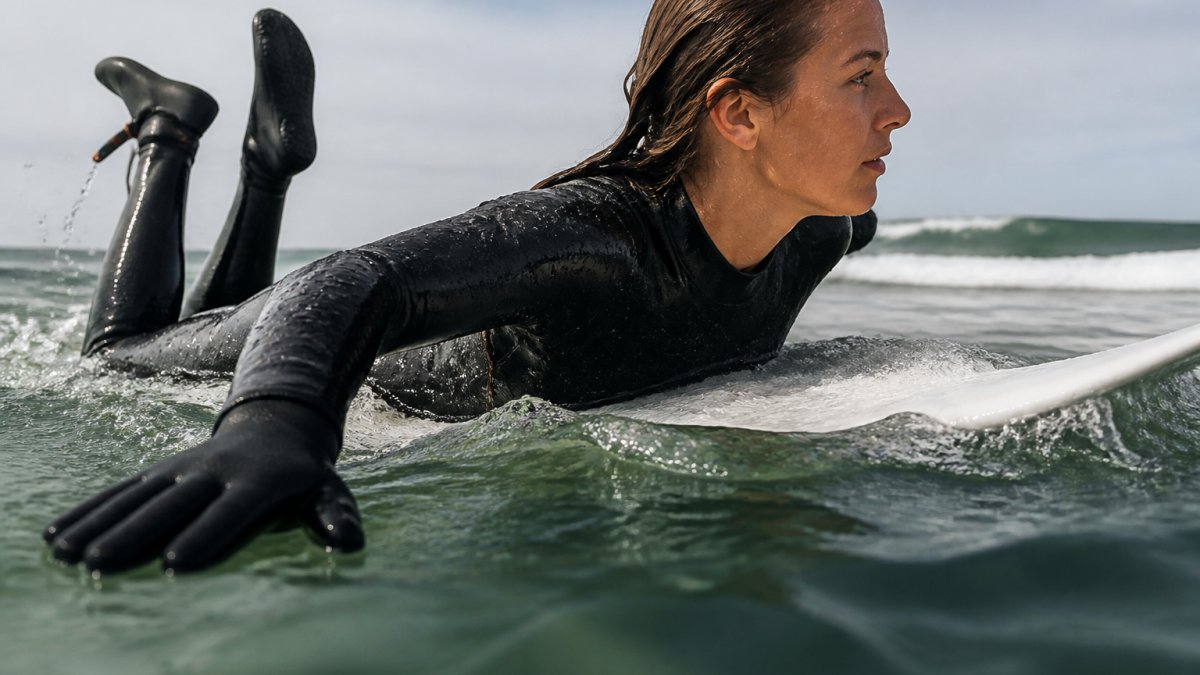
Your hands and feet lose heat fast. They're far from your core, so your body doesn't prioritise keeping them warm. Boots seal around your ankles and prevent water flushing in and out. Gloves do the same for your hands. Both trap a thin layer of warm water against your skin.
The catch is dexterity. Thick boots make paddling awkward. Gloves make gripping your board harder. You sacrifice some control for warmth. Most surfers accept this trade-off in winter. A few waves with numb fingers beats missing your session entirely.
Choosing the Right Thickness and Fit
Gloves should fit like a second skin. Too loose and water sloshes around inside. Too tight and your hands go numb from lack of blood flow. Try them on before you buy if you can.
Balancing Warmth with Dexterity
A practical compromise: 5mm boots and 3mm gloves. You get decent warmth without losing too much feel. If you're still cold, upgrade to 5mm gloves next winter.
Sisstr 7 Seas 5/4 Chest Zip Wetsuit →
How to Stop Wetsuit Flushing and Lock in Heat
Flushing is when water enters your wetsuit at the neck, wrists, or ankles and cycles through constantly. Every time you move, new cold water replaces the warm water you've heated up. You never get warm.
Stopping flushing saves more heat than anything else you can do.
The best wetsuits have glideskin or sealed necks. Glideskin is a smooth inner lining that seals to your skin. Water can't sneak in. The Sisstrevolution 7 Seas suits use glideskin on the neck to prevent flushing there. Liquid tape on the cuffs seals your wrists and ankles too.
Check your suit's seams. Glued and blind-stitched seams don't let water through. All Sisstrevolution 7 Seas suits use triple-glued, blind-stitched seams for maximum sealing.
Fit matters too. A suit that's too loose lets water flush in everywhere. A suit that's too tight restricts movement and can cut off circulation. Get your size right. If you're between sizes, size down for a snugger fit.
Staying Warm Before and After Your Session
What you do on land matters as much as what you wear in the water.
Before you paddle out, warm up your body. Do some stretches. Jog a bit. Get your heart rate up. A warm body stays warmer in cold water. If you're shivering before you enter the water, you're already losing the battle.
Eat something with carbs and protein 30-60 minutes before your session. Your body burns fuel to generate heat. An empty stomach means less fuel to burn. A banana and some peanut butter work fine.
After your session, get out of your wetsuit as soon as you can. Wet neoprene pulls heat from your body. Dry off completely and put on warm, dry clothes immediately. Have a hot drink ready. Tea, coffee, or hot chocolate all help your body recover.
Change in a warm car or indoors if possible. Changing on a cold beach in the wind loses heat fast. If you have to change outside, do it quickly and get moving.
How to Take Off a Wetsuit Without Losing Body Heat
Removing a wetsuit properly keeps you warmer longer.
Peel it down slowly from the shoulders. Don't yank it. Yanking creates air pockets that expose your skin to the cold. Slow, steady peeling keeps your skin covered as long as possible.
Work one arm out at a time. Keep the rest of the suit on your body. Once both arms are free, peel the suit down to your waist. Then take off the bottom half.
Have a towel ready before you start. Wrap yourself immediately after the suit comes off. Don't stand around naked or in just a swimsuit. Evaporation pulls heat from your skin fast.
Dry your hair if it's wet. Your head loses heat quickly. A dry head helps your whole body stay warm.
Put on a warm top and trousers straight away. Don't wait. Your body's still cooling down from the cold water. Every second counts.
Conclusion
Staying warm in cold water surfing comes down to three things: the right wetsuit thickness, proper sealing to stop flushing, and warm layers when it's extreme. Get those right and you'll spend more time in the water and less time shivering on the beach.
The Sisstrevolution 7 Seas range handles staying warm in cold water surfing across all winter conditions. Whether you choose the 5/4 Chest Zip for moderate cold or the 6/5 Hooded for extreme conditions, you're getting 100% super stretch neoprene, thermal lining that dries fast, glideskin seals, and triple-glued seams. Shop the collection and find your perfect winter suit today.
Frequently Asked Questions
How thick should a wetsuit be for cold-water surfing?
Wetsuit thickness depends on water temperature. For water between 8-12°C, a 5/4mm wetsuit provides excellent insulation. For slightly warmer conditions around 11-14°C, a 4/3mm works well. The first number represents chest thickness, the second the arms and legs. Thicker neoprene traps more body heat but can reduce mobility, so match the thickness to your local water temperature rather than going thicker than necessary.
Do wetsuit boots and gloves actually help you stay warmer?
Yes, significantly. Your extremities lose heat rapidly in cold water, and boots and gloves can reduce heat loss. They're especially valuable in water below 10°C. The trade-off is reduced dexterity, so test different thicknesses to find your balance.
What causes wetsuit flushing and how do I stop it?
Flushing happens when cold water enters the suit through gaps at the neck, wrists, and ankles, then cycles out as you move. Stop it by checking that your wetsuit fits snugly at these points. Look for glideskin neck seals and liquid-taped cuffs that prevent water entry. Ensure your suit isn't too loose; a proper fit means minimal water exchange. Some suits feature advanced sealing technology that makes a significant difference in cold conditions.
How should I stay warm before and after surfing in winter?
After your session, change into dry clothes immediately and wrap up in a warm towel or changing robe. Have a hot drink ready and avoid sitting around wet. Dry your wetsuit thoroughly inside and out before your next session; a damp suit loses warmth efficiency. Consider a post-surf warm-up routine like a walk or light stretching to maintain core temperature.